
Tuléar: the sunny gateway to south‑western Madagascar
On the south‑west coast of Madagascar, where the landscapes turn dry, dusty and filled with baobabs and spiny forests, lies Toliara — better known by its old French name, Tuléar. Facing the warm waters of the Mozambique Channel, this laid‑back coastal city feels completely different from the humid rainforests and highland towns found elsewhere on the island.
Here the pace is slower, brighter and deeply tied to the sea. The sun dominates almost every season of the year. Fishing pirogues drift across turquoise lagoons while Vezo fishermen navigate coral reefs that stretch for kilometres along the coast. Dusty streets lined with tamarind trees lead to busy markets filled with seafood, spices, woven baskets and tropical fruit brought in from inland villages.
Tuléar is not a city of monuments or grand colonial architecture. Its charm comes from its location and the extraordinary landscapes that surround it. Within a short distance, visitors can explore mangrove forests, spiny deserts, sacred baobabs, coral lagoons and some of the world’s most unique ecosystems.
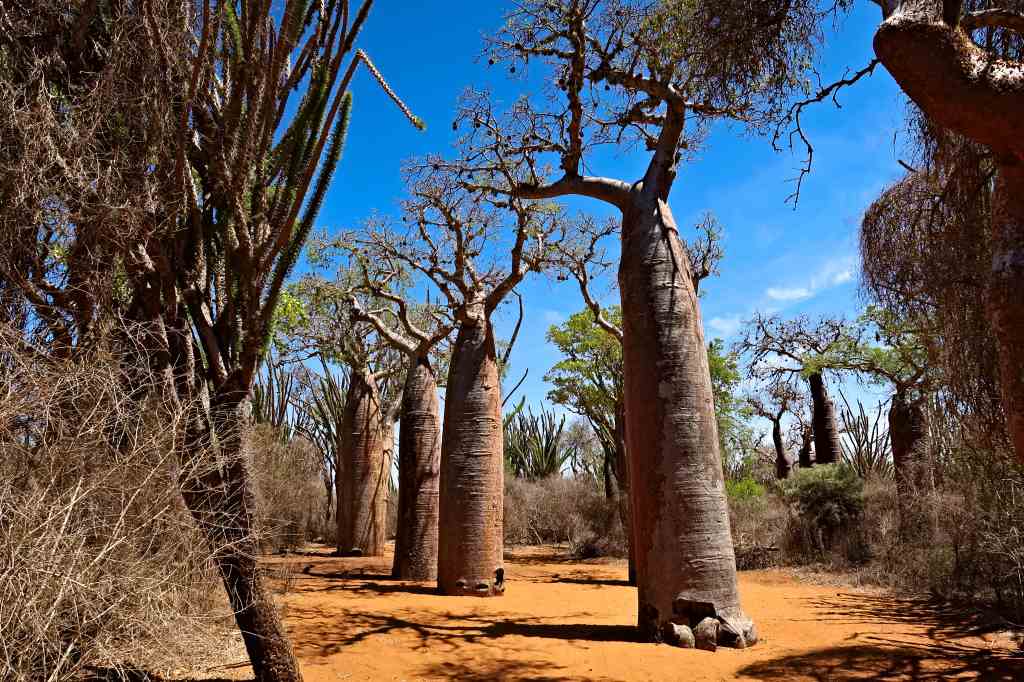
Madagascar’s south‑west coast feels almost surreal. The vegetation shifts dramatically from the green highlands to the dry spiny forests filled with octopus trees, euphorbias, baobabs and strange endemic plants found nowhere else on Earth. Combined with the turquoise sea and endless sun, the region creates one of the island’s most unforgettable atmospheres.
A history written by the sea
For centuries, the south‑west coast of Madagascar was connected to the maritime trade routes crossing the Mozambique Channel and the Indian Ocean. Arab sailors, African traders and later European merchants sailed these waters long before the French arrived.
The region around Toliara became closely linked to the Vezo people, semi‑nomadic fishing communities whose lives have always revolved around the sea. Even today, Vezo identity is deeply tied to fishing, navigation, tides and traditional wooden pirogues.
During the colonial period, the French developed Tuléar into an important coastal town and administrative centre of the south‑west. Trade grew through the port while roads slowly linked the city to the interior regions and the highlands. Yet despite modernisation, the region preserved a strong sense of isolation due to its dry climate and vast distances.
Unlike the lush eastern regions of Madagascar, the south‑west remained sparsely populated and dominated by extraordinary endemic ecosystems adapted to drought and heat. This isolation helped preserve the traditional way of life in many Vezo fishing villages along the coast.
Today, Toliara remains the gateway to south‑western Madagascar — a place where desert landscapes meet coral lagoons and where local life still follows the rhythm of the ocean.
Honko Mangroves: a hidden world of water and roots
One of the most fascinating excursions from Tuléar leads to the Honko Mangrove Reserve near Ambondrolava.
Far from the dry landscapes usually associated with south‑western Madagascar, the Honko mangroves reveal a rich ecosystem of winding waterways, tangled roots, birds, crabs and peaceful lagoons. Exploring the reserve by canoe allows visitors to glide silently through narrow channels beneath dense mangrove tunnels where sunlight filters through the leaves and reflects on the calm water.
The reserve was created to protect and restore mangrove ecosystems that play a vital role for coastal communities and marine life. Mangroves act as natural barriers against erosion, breeding grounds for fish and carbon‑storage ecosystems crucial for the region’s environmental balance.
The atmosphere is peaceful and almost hypnotic. Fishermen paddle slowly between the roots while herons and kingfishers move through the branches above. The contrast between the dry coastal landscapes and the cool, green world of the mangroves makes the trip especially memorable.
At sunset, the reflections on the water become spectacular, turning the whole reserve into shades of gold and deep orange.
Ifaty and Mangily: coral lagoons and Vezo villages
North of Tuléar, the coast towards Ifaty and Mangily offers some of Madagascar’s most famous seascapes.
Unlike the roaring, powerful Indian Ocean of the east coast, the Mozambique Channel here is protected by a long coral reef system that creates calm turquoise lagoons perfect for swimming, snorkelling and diving.
The beaches are lined with fishing pirogues, baobabs and spiny‑forest vegetation while Vezo fishermen continue their traditional way of life almost unchanged for generations. Mornings are particularly beautiful when the sails appear on the horizon and the fishermen return with octopus, fish and seafood harvested from the reef.
The coral reef near Ifaty is among the largest in Madagascar and harbours extraordinary marine biodiversity. Snorkelling trips reveal colourful corals, tropical fish, starfish and sometimes turtles moving through the shallow lagoon waters.
Despite tourist development, the atmosphere remains relaxed and relatively low‑key compared to many tropical beach destinations worldwide.
Reniala Reserve: the forest of baobabs and spiny trees
Near Mangily lies one of the most extraordinary natural sites in south‑western Madagascar: the Reniala Reserve.
The name “Reniala” means “mother of the forest” in Malagasy, a fitting description for this protected area dedicated to preserving the unique spiny‑forest ecosystem of the south‑west.
Walking through Reniala feels like stepping onto another planet.
The landscape is filled with bizarre endemic plants: towering baobabs, octopus trees, spiny euphorbias, drought‑adapted shrubs and massive pachypodiums. Many of the species found here exist nowhere else in the world.
The reserve is also home to lemurs, reptiles, birds and numerous endemic species specially adapted to the harsh, dry climate. Guides explain the medicinal uses of local plants as well as the ecological importance of this rare ecosystem.
At sunset, the baobabs glow under the warm orange light while the silhouettes of the spiny trees create spectacular desert‑like landscapes against the sky.
For photographers and nature lovers, Reniala is one of the highlights of the south‑west coast.
Saint Augustin: between cliffs, baobabs and Vezo culture
South of Tuléar lies the peaceful bay of Saint Augustin, one of the most beautiful and atmospheric coastal areas in the region.
The road to Saint Augustin passes through dry landscapes dotted with baobabs and spiny forests before reaching a wide bay surrounded by dunes, cliffs and fishing villages.
The atmosphere here feels isolated and timeless.
Vezo fishermen sail traditional pirogues across calm waters while children play near wooden boats resting on the sand. The bay itself is sheltered and calmer than the open ocean, creating beautiful reflections at sunrise and sunset.
Excursions around Saint Augustin often include: visits to fishing villages, walks through baobab landscapes, short hikes to viewpoints overlooking the bay and encounters with local Vezo communities.
The area also offers excellent birdwatching opportunities and remarkable landscapes where deserts suddenly meet the sea.
Unlike more frequented beach destinations, Saint Augustin retains a strong sense of authenticity and tranquillity.
Conclusion
Toliara is not simply a coastal town. It is the gateway to one of Madagascar’s most unique landscapes — a world where coral lagoons, baobabs, mangroves, spiny forests and Vezo fishing culture coexist under endless sun.
Whether exploring the peaceful waterways of the Honko mangroves, snorkelling in the turquoise lagoon of Ifaty, strolling among the strange plants of Reniala or watching pirogues drift across Saint Augustin Bay, travellers quickly discover a region unlike any other on the island.
The south‑west coast offers a slower, warmer and more relaxed side of Madagascar — a side defined by the sea, the desert and the extraordinary beauty of nature shaped by drought and ocean winds.
Best time to visit
The best time to visit Toliara and the south‑west coast generally runs from April to November during the dry season, when the weather is warm, sunny and ideal for exploring mangroves, coral reefs and spiny forests.
Between December and March, temperatures rise and tropical rains can occasionally affect access to remote areas, although the landscape becomes greener and lusher.