
Lokobe National Park is the last substantial remnant of primary rainforest on the island of Nosy Be, in north‑western Madagascar. Set on the island’s south‑eastern coast, it protects an evergreen forest of tall trees, lianas, palms and dense undergrowth, with an exceptional concentration of chameleons, geckos, lemurs and endemic amphibians.
Reachable only on foot and by pirogue or boat from nearby coastal villages, Lokobe National Park offers a compact but genuinely wild experience. Shaded trails, both day and night walks, and close contact with local communities make it a must‑do excursion for travellers staying on Nosy Be who want a true rainforest experience without leaving the archipelago.
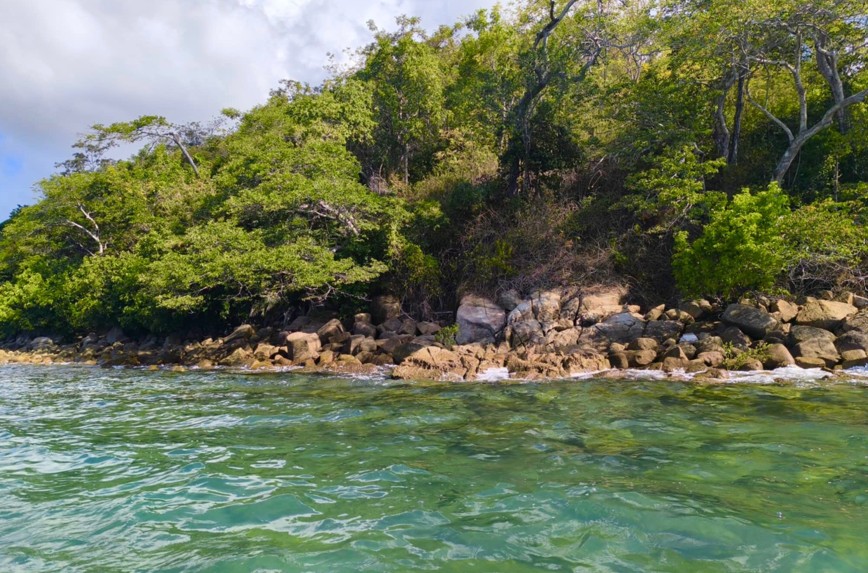
Geography and landscape of the park
Lokobe National Park lies on the south‑eastern coast of Nosy Be, in the Diana region.
- Ecosystem: low‑altitude coastal rainforest on volcanic soils
- Area: about 740 ha of protected core forest
- Relief: small forested hills with moderate slopes, small bays and adjacent beaches
- Climate: warm and very humid, with a marked rainy season (November–April) and a “dry” season that remains moist (May–October)
The landscape alternates between dense forest, small clearings, streams and palm‑fringed beaches looking out over the Mozambique Channel.
Trails and circuits
Visits to Lokobe National Park typically begin with a pirogue or boat trip from Nosy Be to a coastal village (often Ampasipohy), followed by guided walks:
- Day walks (2–4 hours): Easy forest trails to look for lemurs, chameleons, geckos, frogs and characteristic plants.
- Night walks (1.5–3 hours): Guided evening outings to spot mouse lemurs, sleeping chameleons, rainforest frogs and large insects.
- Combined forest and village visits: Full‑day trips including forest exploration, lunch in a local home and return by pirogue.
Trails can be muddy and slippery after rain, but distances are short and elevation gains are modest.
Wildlife
Lokobe National Park is renowned for dense and easily observed rainforest wildlife:
Lemurs:
- Black lemur of Nosy Be (Eulemur macaco), an emblematic species of the island
- Several nocturnal mouse lemurs (Microcebus spp.)
Chameleons:
- Panther chameleon (Furcifer pardalis) with its striking colour variations
- Tiny leaf‑litter and understorey chameleons (Brookesia spp.)
Geckos and lizards:
- Bright green day geckos (Phelsuma), leaf‑tailed geckos and skinks
Amphibians:
- Many rainforest frogs, several of them endemic to Nosy Be or northern Madagascar
Birds:
- Drongos, vangas, couas, forest kingfishers and other humid‑forest birds.
Flora and vegetation
The vegetation of Lokobe National Park typifies north‑western coastal rainforests:
- Evergreen trees forming a closed canopy
- Lianas, palms and pandanus with a dense shrub layer
- Numerous epiphytes (mosses, orchids, ferns) coating trunks and branches
As the last major block of primary forest on Nosy Be, Lokobe is crucial for local biodiversity and for regulating the island’s water resources.
Ecological and cultural importance
Conservation: Lokobe safeguards the last substantial primary forest remnants of Nosy Be, sustaining many species that are endemic to the island and northern Madagascar.
Community‑based tourism: coastal villages, especially Ampasipohy, rely on pirogue transport, guiding and homestays; the forest is central to both their identity and income.
Environmental education: its proximity to Nosy Be’s beach resorts makes Lokobe an ideal setting to raise awareness about the importance of humid forests.
Conclusion
Easily reached from Nosy Be’s beaches, Lokobe National Park is a pocket of dense tropical forest within a well‑known island destination. With black lemurs, panther chameleons and dazzling day geckos, it offers a rich rainforest immersion and a clear sense of Nosy Be’s original wild nature in just a day or evening outing.