
Isalo National Park – canyons, natural pools and sandstone landscapes of south‑western Madagascar
Isalo National Park is one of Madagascar’s most iconic and spectacular national parks, famous for its sandstone formations, deep canyons, natural pools and open landscapes that contrast sharply with the eastern rainforests. Located in the south‑west of the island, near Toliara and along the RN7, Isalo offers a unique experience defined by geology, light and wide‑open spaces.
Geography and landscape of the park
Isalo National Park spans a sandstone massif formed during the Jurassic period. Over millions of years, erosion has sculpted a spectacular landscape of canyons, plateaus, cliffs and isolated rock formations. The altitude ranges from 500 to 1,200 metres, with terrain alternating between open savannas, rocky zones and hidden valleys.
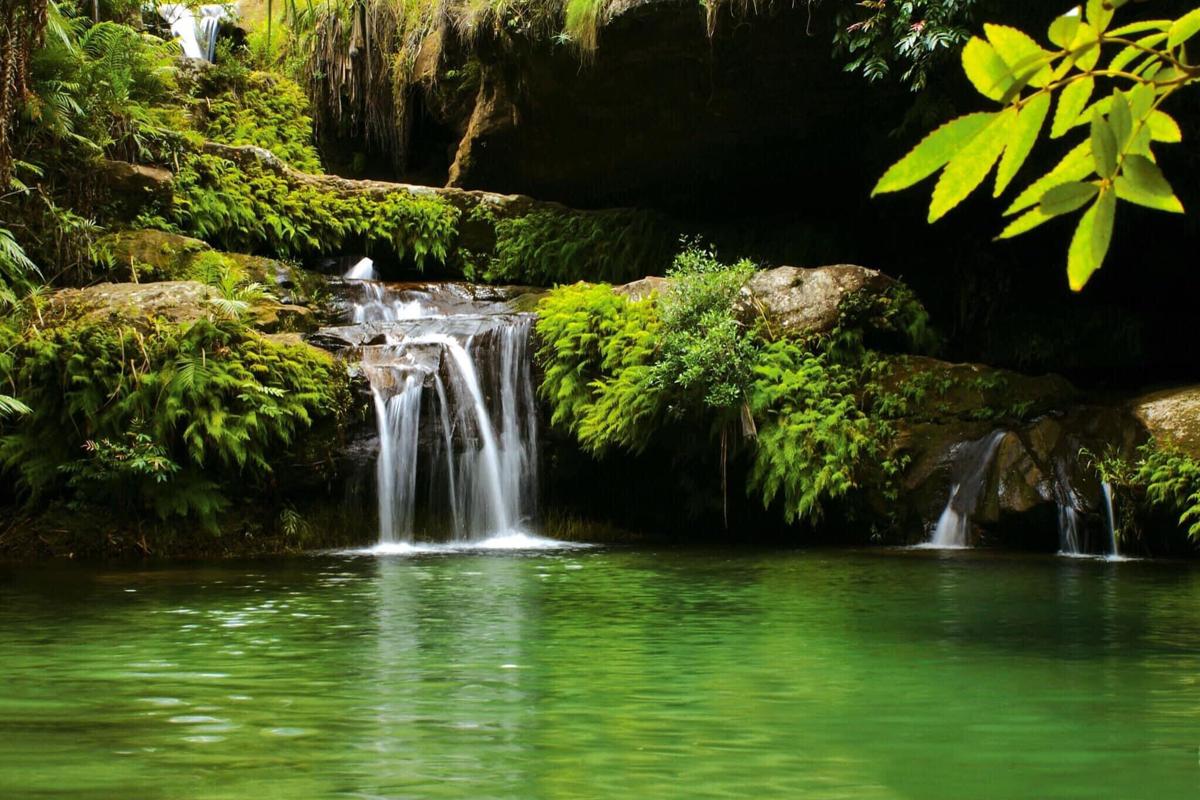
One of the most striking features of the park is its deep canyons, some several kilometres long, with vertical walls in ochre, reddish and golden hues that change with the light. At the bottom of these canyons flow seasonal rivers that form natural pools and small oases surrounded by vegetation, offering a sharp contrast to the arid surroundings.
The climate is dry tropical, with a long dry season and much lower rainfall than in the east. This gives rise to drought‑adapted vegetation, dominated by xerophytic plants, savannas and gallery forests in the wetter areas. The coexistence of arid environments and humid microhabitats is one of Isalo’s most fascinating features.
Circuits and trails
Isalo is one of the best hiking destinations in Madagascar, with well‑defined circuits for different levels. Visits are always made with a certified local guide.
Main circuits
Canyon des Makis and Natural Pool (Piscine Naturelle)
The most popular circuit. A moderate hike through a canyon inhabited by lemurs leads to a crystal‑clear natural pool surrounded by pandanus and palms. Ideal for a half‑day.
Namaza Circuit
A shorter route with waterfalls, viewpoints and perfect sunset spots. Suitable for quick visits.
Canyon des Rats and Canyon des Singes
Longer, more adventurous hikes with spectacular scenery and fewer visitors.
Fenêtre de l’Isalo (Isalo Window)
Iconic rock formation, especially impressive at sunset when the sun aligns with the opening.
Multi‑day trekking
For the more experienced, routes crossing the massif with overnight camping, allowing exploration of remote areas.
Difficulty depends more on heat, distance and uneven terrain than on large elevation gains.
Lemur species
Although less diverse than the rainforests, Isalo is home to several species well adapted to the dry environment.
Main lemurs
- Ring‑tailed lemur (Lemur catta): emblematic species of southern Madagascar, easily recognisable by its striped tail. Lives in groups and is often seen in open areas.
- Verreaux’s sifaka (Propithecus verreauxi): famous for its unique “dancing” movement on the ground. Common in rocky and savanna areas.
- Red‑fronted brown lemur (Eulemur rufifrons): mainly inhabits gallery forests near water.
These species have developed adaptations to survive water scarcity and high temperatures.
Flora and vegetation
Isalo’s vegetation reflects its dry climate, yet with surprising contrasts in wet areas.
Vegetation types
- Savannas: dominated by resistant grasses
- Xerophytic vegetation: plants adapted to drought
- Gallery forests: dense vegetation along rivers and canyons
Notable plants
- Pachypodium: succulent plant resembling an “elephant’s foot”
- Aloe: adapted to arid conditions
- Pandanus: found near water
- Endemic palms: in oases within the canyons
- Medicinal plants: used by local communities
Inside the canyons, humidity allows ferns, mosses and other species typical of wetter environments to grow, creating unique micro‑ecosystems.
Wildlife beyond lemurs
Although more discreet than in the rainforest, Isalo’s fauna includes:
- Reptiles: lizards and chameleons adapted to dry environments
- Birds: such as the Madagascar paradise flycatcher, raptors and endemic species
- Insects: especially butterflies in the wet zones
Visibility is generally good thanks to the open landscape.
Ecological importance
Isalo National Park protects a unique ecosystem in Madagascar:
- Conserves under‑represented dry habitats
- Protects endemic species adapted to extreme conditions
- Preserves essential water sources
- Promotes sustainable ecotourism
It faces threats such as fires, livestock pressure and climate change.
Conclusion
Isalo National Park offers an experience completely different from the rest of Madagascar. Its sculpted landscapes, spectacular canyons and hidden oases create an environment of great beauty and contrast. Although its fauna is less abundant than in the rainforests, the combination of geology, hiking and adapted biodiversity makes it an unmissable destination.
From swimming in a natural pool after a hike to watching the sunset at the Isalo Window, this park delivers memorable moments in a unique setting. For those seeking open landscapes, adventure and ecological diversity, Isalo is an essential stop on any journey through southern Madagascar.
Access and best time to visit
The park is located about 700 km south‑west of Antananarivo, near the town of Ranohira; accessible via the RN7, about 7–8 hours by car from Toliara. Or 230 km north‑east of Toliara.
Best period from April to October (dry season, milder temperatures and optimal hiking); from November to March it is hotter and wetter, with more vegetation but a higher risk of rain.
Tips
- Always book a certified guide for safety and information
- Wear sun protection, a hat and comfortable hiking shoes (the terrain can be rocky)
- Carry plenty of water and snacks due to the heat
- Respect wildlife by keeping your distance
- Combine with a visit to Zombitse‑Vohibasia National Park for more biodiversity