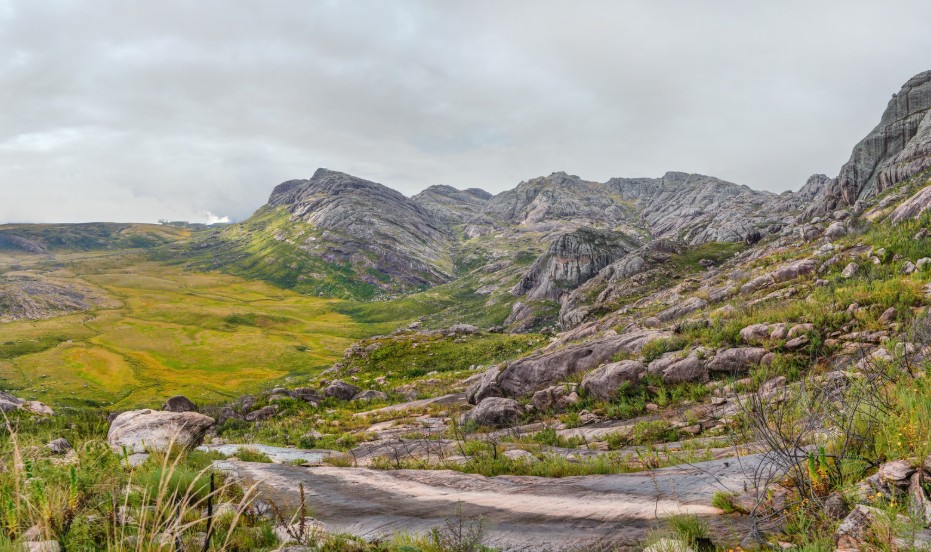
Tsingy de Bemaraha National Park is one of Madagascar’s most spectacular landscapes and a UNESCO World Heritage Site. It is famous for its dramatic tsingy limestone formations – vast “stone forests” of razor‑sharp pinnacles and blades – rising above the dry western plateau.
Remote and harder to reach than many other parks, Tsingy de Bemaraha National Park attracts adventurous travellers with its suspension bridges, narrow passages between the rocks, canoe trips on the Manambolo River, and opportunities to see lemurs, endemic birds and drought‑adapted plants.
Geography and landscape of the park
Tsingy de Bemaraha National Park lies in the Melaky region of western Madagascar, north of Morondava, near the village of Bekopaka.
Area of around 152,000 ha (national park plus strict nature reserve).
Geological origin: former marine limestone plateau deeply sculpted by erosion into tsingy pinnacles.
Terrain: extensive tsingy fields, deep canyons, sinkholes, caves and cliffs overlooking the Manambolo River valley.
Altitude: roughly 150–750 m.
Climate: tropical dry, with a rainy season (December–March) and a long dry season (April–November); hot daytime temperatures.
The stark contrast between bare limestone plateaus and forested canyons creates an exceptionally dramatic, photogenic landscape.
Trails and circuits
Access to the tsingy is via equipped circuits with ladders, handrails and suspension bridges; guides are mandatory:
Petit Tsingy (near Bekopaka): a few hours’ walking in more accessible tsingy, with viewpoints, caves and lemur sightings.
Grand Tsingy: longer, more demanding routes over the tsingy “rooftops”, including suspension bridges and technical sections using a harness.
Manambolo River trip: canoe outing through the Manambolo gorge to view cliffs, caves and traditional Sakalava burial sites.
Dry forest and canyon trails: quieter walks in forested ravines to see wildlife away from the busiest circuits.
Some routes require a good head for heights, comfort with ladders and exposed sections, and the ability to squeeze through narrow rock corridors.
Wildlife
Despite its stark, rocky appearance, Tsingy de Bemaraha National Park supports a rich array of wildlife.
Key species:
Decken’s sifaka (Propithecus deckenii), a white dry‑forest lemur often seen along forest edges and canyons
Red‑fronted brown lemur (Eulemur rufus)
Several nocturnal lemurs (e.g. Avahi and Microcebus species of western Madagascar)
Madagascar fish eagle (Haliaeetus vociferoides), a highly threatened raptor occasionally seen near cliffs and water
Numerous reptiles, including chameleons, geckos and non‑venomous snakes
Bats in caves and a diverse bird community linked to dry forest and rock walls
Flora and vegetation
The flora of Tsingy de Bemaraha National Park is adapted to karst and strong seasonal drought:
Dry deciduous forest: trees shedding leaves in the dry season, lianas and shrubby understorey.
Tsingy vegetation: plants rooted in limestone cracks, including Pachypodium, euphorbias, aloes and extremely drought‑tolerant shrubs.
Canyon and riparian forests: greener, denser vegetation along canyons and rivers, providing critical refuges for many animals.
These plant communities stabilise fragile rock substrates, limit erosion and maintain cooler, moister micro‑habitats within deep gullies.
Ecological and cultural importance
World Heritage:Tsingy de Bemaraha National Park is a UNESCO World Heritage Site for its unique karst landscapes and associated biodiversity.
**Con
finish english
World Heritage:Tsingy de Bemaraha National Park is a UNESCO World Heritage Site for its unique karst landscapes and associated biodiversity.
Conservation role: the park protects some of western Madagascar’s best remaining dry deciduous forest and karst ecosystems, which are heavily degraded elsewhere.
Cultural significance: caves and cliffs are used as traditional burial and sacred sites by local communities, especially the Sakalava, and are governed by fady (taboos) that visitors must respect.
Conclusion
With its stone “cathedrals”, suspension bridges and deep canyons, Tsingy de Bemaraha National Park offers one of Madagascar’s most spectacular and adventurous hiking experiences. For travellers willing to undertake the long access and physically demanding circuits, it delivers an unforgettable combination of extreme geology, dry‑forest wildlife and rich local culture in the island’s wild west.
Map
Recommended Hotels
🏨
Tanankoay
🏨
Olympe de Bemaraha
🏨
Grand Hotel des Tsingy
🏨
Le Soleil de Tsingy
How to Get There
About 250 km north of Morondava, a 12-hour drive to Bekopaka, gateway to Tsingy de Bemaraha National Park.
When to Go
Best from May to October in the dry season, when tracks are passable and tsingy circuits are open.
From November to April, heavy rains and floods make access difficult or impossible; the park is generally closed.
Activities
Walking the Petit Tsingy circuits with viewpoints, caves and lemur watching
Tackling the Grand Tsingy routes with ladders, harnesses and suspension bridges
Canoe trips on the Manambolo River to see cliffs, caves and Sakalava tombs
Wildlife watching in dry forest and canyon habitats (lemurs, birds, reptiles)
💡 Local Tips
Plan extra days for weather and track delays; access is long and can be unpredictable
Wear sturdy closed hiking shoes for sharp limestone, ladders and uneven rock
Bring sun protection, plenty of water and light clothing for intense daytime heat
If you fear heights or tight spaces, choose Petit Tsingy rather than the most exposed routes
Embark on an extraordinary expedition through one of Madagascar’s most secluded and untamed corridors, a journey that traces the rugged coastline and hidden hinterlands of the Boeny region. Starting from the vibrant port city of Mahajanga, the true gateway to western Madagascar, this immersive adventure follows the historic National Road 4 into a landscape where […]