The Makay Massif is one of those rare places spoken of in hushed tones and deep respect,
as it embodies the raw, sacred, and untamed nature of Madagascar.
Located between the Menabe and Atsimo-Andrefana regions in the southwest of the island,
this vast labyrinth of sandstone canyons is considered one of the last truly untouched wilderness areas on Earth.
Often referred to as “Madagascar’s Last Eden”,
the Makay is a dream destination for explorers, scientists, experienced hikers,
and travelers seeking an authentic adventure far removed from traditional tourist routes.
Remote, difficult to access, and absolutely spectacular,
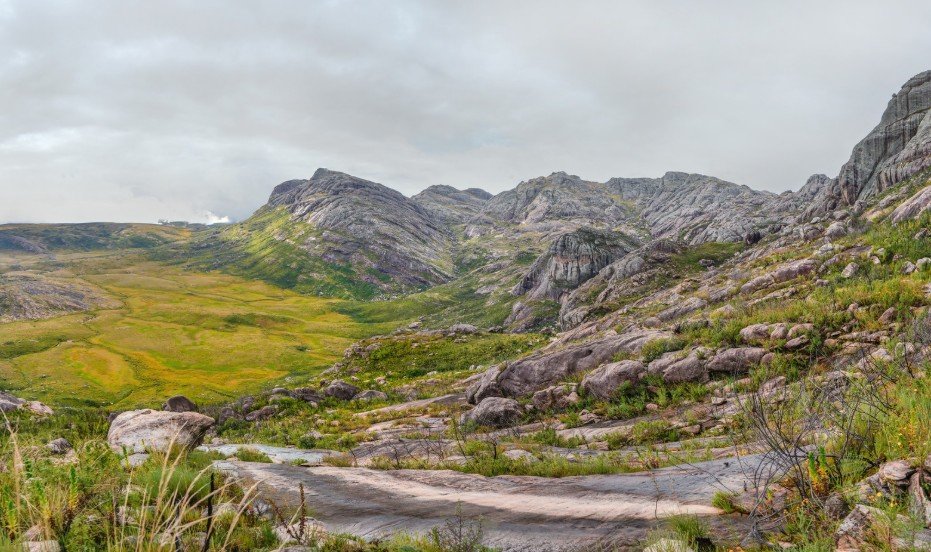
the Makay offers a breathtaking diversity of landscapes:
sandstone cathedrals, hidden primary forests, secret rivers,
natural pools, arid plateaus, dunes, savannas, caves, and lush green valleys.
It is a lost world, protected by a natural stone fortress.
1. The Makay: A Lost World in Southwestern Madagascar
Geological Origins
The Makay is a Jurassic sandstone massif,
sculpted over millions of years by wind and water erosion.
The result is a gigantic maze of narrow canyons,
some so tight that sunlight barely reaches the ground,
alternating with wide plateaus offering endless panoramic views.
The rock formations create dramatic and often surreal landscapes, including:
- Natural stone towers and cathedral-like formations
- Deep, humid valleys
- Sheer vertical cliffs
- Caves with ancient rock art
- Golden sand corridors
A Sanctuary of Biodiversity
Because of its extreme isolation and difficult access,
the Makay has become a refuge for numerous animal and plant species.
Some of them exist nowhere else in the world.
- Endemic lemurs (sifakas, brown lemurs, mouse lemurs)
- Rare reptiles
- Amphibians isolated in humid micro-forests
- Relict plant species unique to the massif
This untouched ecosystem has attracted many scientific expeditions,
notably those led by the French explorer Évrard Wendenbaum,
whose work has played a major role in bringing international attention
to the Makay and strengthening its conservation.
2. How to Reach the Makay Massif
Reaching the Makay is an adventure in itself.
There are no paved roads leading directly to the massif.
Access relies entirely on rough dirt tracks, river crossings,
and favorable weather conditions.
Main Departure Points
The Makay can be reached from:
- Antananarivo (Tana) via Tsiroanomandidy or Malaimbandy
- Toliara (Tuléar) heading north through Beroroha or Morondava
Option 1: Via Morondava (Most Common Route)
Typical itinerary:
- Antananarivo → Morondava (flight or road)
- Morondava → Malaimbandy
- Malaimbandy → Beronono or Tsivoko (gateway villages)
Total duration: 2 to 3 days depending on conditions
Difficulty: High
Vehicle required: Reliable 4×4 with experienced driver
Option 2: Via Mahabo and Beroroha
A more challenging route, mainly used by scientific expeditions.
Option 3: Private Aircraft
Some high-end expeditions charter small aircraft to basic airstrips near the massif.
This option is extremely expensive and reserved for specialized missions.
Important:
The Makay is not accessible without a guide.
Trails are unmarked, navigation is complex, and the risk of getting lost is real.
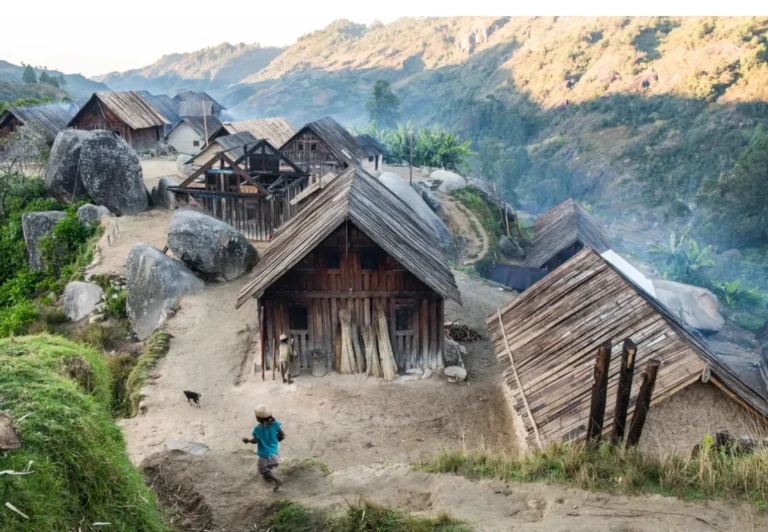
Local villages provide guides, porters, and cooks.
3. Best Time to Visit the Makay Massif
Dry Season (April to November) – Ideal Period
- Moderate daytime temperatures
- Passable tracks and trails
- Rivers remain crossable
- Fewer mosquitoes
- Cool but comfortable nights
This period is chosen by nearly all expeditions.
Rainy Season (December to March) – Strongly Discouraged
- Torrential rain inside canyons
- Risk of sudden flash floods
- Completely inaccessible routes
- Extreme heat and humidity
During this season, the Makay becomes dangerous
and most professional guides refuse departures.
4. What Makes the Makay Truly Unique
1. An Endless Canyon Labyrinth
The canyons are the true treasure of the Makay.
Some are wide and sunlit, others extremely narrow,
where hikers walk through shallow water between 50-meter-high rock walls.
Each canyon has its own character:
- Shaded and humid
- Dry and sandy
- Lush and green
- Filled with caves and overhangs
In many areas, you can walk for days without encountering another human being.
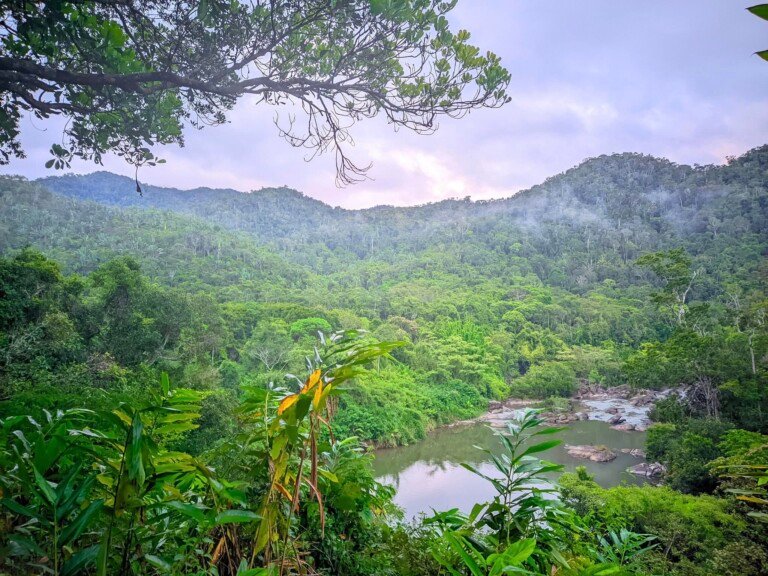
2. Hidden Primary Forests
At the bottom of the canyons, where humidity never disappears,
small pockets of primary forest survive —
true prehistoric relics.
- Giant ferns
- Dense lianas
- Centuries-old trees
- Amphibians found nowhere else
These forests are considered priceless biodiversity reservoirs.
3. Rare and Endemic Wildlife
Lemurs
- Propithecus verreauxi (Verreaux’s sifaka)
- Lemur catta (ring-tailed lemur) in savanna zones
- Nocturnal mouse lemurs
Birdlife
- Madagascar kestrel
- Drongos
- Endemic passerines
- Raptors soaring above the plateaus
Reptiles and Amphibians
- Chameleons
- Leaf-tailed geckos
- Non-venomous snakes
- Unique frog species
4. Natural Pools
Rivers flowing through the Makay create natural pools
with clear, refreshing water, surrounded by golden rock and dense vegetation.
Swimming after a long hiking day is pure bliss.
5. Caves and Rock Art
Several caves contain traces of ancient rock paintings,
evidence of early human presence in the region.
Their origins remain mysterious and are likely linked
to the Bara and Sakalava peoples.
5. Trekking Experience: What to Expect
Mobile Camps
Treks in the Makay are fully expedition-based,
with wild camps set up each night in a new location.
Porters carry tents, food, cooking equipment, and filtered water.
High Physical Demand
Travelers should expect:
- 5–8 hours of walking per day
- Rock scrambling
- River crossings
- Narrow canyon passages
- Heat endurance
Suitable for experienced hikers, challenging for beginners.
Total Disconnection
There is no mobile network in the Makay.
Satellite phones are used only for emergencies.
No wifi, no infrastructure — only nature.
6. Accommodation and Organization
There are no hotels inside the Makay.
All stays are organized as camping expeditions.
Outside the massif, basic lodges and guesthouses are available
in Morondava, Malaimbandy, and Beroroha.
7. Practical Advice
- Carry 2–3 liters of water per person per day
- Protect cameras with waterproof bags
- Wear sturdy hiking shoes
- Bring breathable but covering clothing
- Use insect repellent
- Respect local fady (taboos)
- Never travel without a certified guide
- Carry a complete medical kit
Conclusion
The Makay Massif is one of Madagascar’s most precious and mysterious treasures.
Vast, wild, and breathtaking, it represents the purest expression
of Madagascar’s untamed nature.
Visiting the Makay is not a simple trip —
it is a true expedition, a journey into a timeless world,
and a deep immersion into the island’s hidden heart.
Those who venture there return transformed,
marked forever by the power of its landscapes and the silence of stone.