The Ultimate Travel Guide to One of Madagascar’s Rarest and Most Pristine Natural Reserves
Baly Bay National Park is one of Madagascar’s most extraordinary yet least visited protected areas.
Located in the Boeny region along the island’s remote northwest coast, this remarkable national park
covers approximately 57,000 hectares of unspoiled wilderness.
The park showcases an exceptional variety of landscapes, including dry savannas, deciduous forests,
spiny bush, mangroves, pristine white-sand beaches, coral reefs, and turquoise lagoons.
This diversity makes Baly Bay National Park one of the most ecologically complex conservation areas in Madagascar.
What truly elevates the park to global importance is that it is the
only natural habitat in the world of the
Ploughshare Tortoise (Astrochelys yniphora),
one of the rarest and most critically endangered reptiles on Earth.
Still largely untouched by mass tourism, Baly Bay offers travelers a rare opportunity to experience
raw nature, authentic coastal culture, and exceptional biodiversity.
For adventurous travelers and nature lovers, it is one of the most rewarding destinations in northwestern Madagascar.
1. Overview and Ecological Importance of Baly Bay National Park
Established in 1997, Baly Bay National Park is part of the national network managed by
Madagascar National Parks (MNP).
Its creation was primarily driven by the urgent need to protect the Ploughshare Tortoise,
whose population has been decimated by habitat loss and illegal wildlife trafficking.
Today, the park plays a critical role in global conservation efforts.
The total population of the Ploughshare Tortoise is estimated at only a few thousand individuals,
making Baly Bay National Park essential to the survival of the species.
Beyond its flagship species, the park is also recognized as a unique
ecological transition zone.
Within a relatively compact area, it contains
six distinct ecosystems, an exceptional concentration even by Madagascar’s standards.
Ecosystems found in Baly Bay National Park:
- Grassland and shrub savanna
- Dry deciduous forests
- Spiny bush and thorny forests
- Mangrove ecosystems
- Coastal dunes and untouched beaches
- Coral reefs and shallow lagoons
This environmental diversity supports an impressive range of wildlife,
including endemic bird species, lemurs, rare reptiles, and abundant marine life
such as dolphins, rays, sea turtles, and vibrant reef fish.
2. How to Reach Baly Bay National Park
Due to its remote location, reaching Baly Bay National Park requires planning,
but the journey is part of the adventure.
The park’s isolation has helped preserve its pristine condition and authentic atmosphere.
Main Access Point: Mahajanga (Majunga)
The closest major city to the park is Mahajanga, approximately 150 kilometers away.
Mahajanga serves as the logistical hub for travelers heading to Baly Bay.
How to Get to Mahajanga
- Domestic flight from Antananarivo (1 hour): the fastest and most comfortable option
- Road travel (10–12 hours): possible but long and physically demanding
Once in Mahajanga, travelers can choose between road, sea, or limited air access to reach the park.
Road Access via Soalala
Most visitors enter the park through the coastal village of Soalala,
which serves as the primary gateway to Baly Bay National Park.
- Distance: approximately 150 km
- Travel time: 8–10 hours depending on road conditions
- Vehicle required: reliable 4×4 vehicle
- Scenery: remote landscapes, Sakalava villages, seasonal river crossings
During the rainy season, road access may become impossible,
making seasonal planning essential for a successful visit.
Sea Access: An Authentic Coastal Adventure
Another option is reaching Soalala or nearby coastal villages by boat from Mahajanga.
This route offers stunning coastal scenery and cultural encounters with local fishing communities.
- Duration: 6–10 hours depending on sea conditions
- Boats: traditional wooden dhows, local speedboats, or chartered vessels
- Advantages: scenic journey and cultural immersion
- Disadvantage: highly dependent on weather and sea conditions
Air Access (Limited and Conditional)
Soalala has a small airstrip, but flights are irregular and usually restricted to private charters.
This option is costly and rare, typically reserved for scientific missions or specialized expeditions.
3. Best Time to Visit Baly Bay National Park
The climate in northwestern Madagascar is tropical and generally dry,
with two clearly defined seasons that significantly affect travel conditions.
Dry Season (April to November) – Best Time to Visit
- Pleasant daytime temperatures ranging from 22°C to 32°C
- Roads and tracks remain accessible
- Excellent visibility for hiking and wildlife observation
- Ideal conditions for boat trips and snorkeling
The dry season is optimal for all activities, including trekking,
wildlife observation, village visits, and marine excursions.
Rainy Season (December to March) – Strongly Discouraged
- Heavy rainfall and muddy terrain
- Roads often become impassable
- Higher risk of cyclones along the northwest coast
- Some lodges and services close temporarily
If visiting during this period is unavoidable, sea access may be preferable,
but only under safe marine conditions.
4. Wildlife and Natural Highlights of Baly Bay National Park
1. The Ploughshare Tortoise (Astrochelys yniphora)
The Ploughshare Tortoise, locally known as “Angonoka”,
is the iconic species of Baly Bay National Park.
This critically endangered tortoise is considered one of the rarest reptiles on the planet.
Its distinctive raised plastron and geometric shell patterns make it instantly recognizable.
Baly Bay is the only place on Earth where this species survives in the wild.
Observation is strictly regulated and must be conducted with certified MNP guides
to ensure the species’ protection.
2. Mangroves, Lagoons, and Marine Ecosystems
The extensive mangrove systems surrounding the bay are vital breeding grounds for fish,
crustaceans, and birds. They also provide dramatic scenery, particularly at sunset.
- Snorkeling in shallow coral lagoons
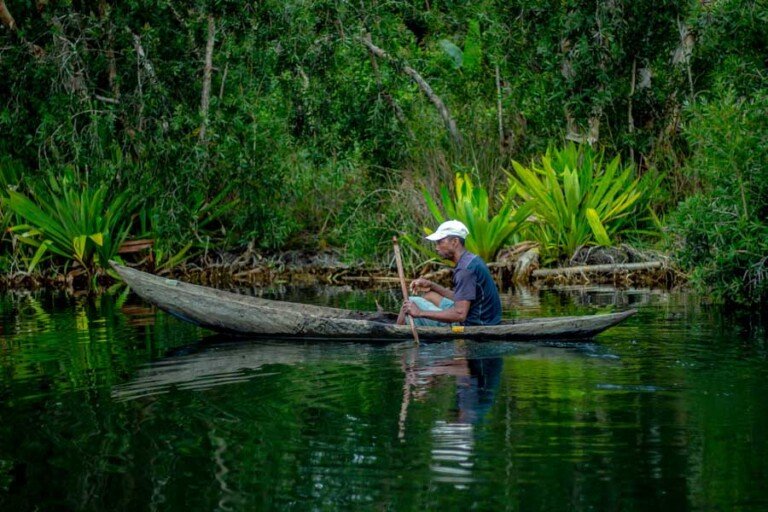
- Traditional canoe excursions through mangroves
- Observation of rays, tropical fish, and sea turtles
3. Terrestrial and Marine Wildlife
Lemurs
- Propithecus verreauxi coronatus (Crowned Sifaka)
- Eulemur fulvus rufus
Birdlife
- Madagascar Fish Eagle
- Madagascar Sea Eagle (extremely rare)
- Flamingos and migratory waterfowl
Reptiles and Marine Species
- Chameleons and geckos
- Non-venomous snakes
- Seasonal nesting sea turtles
- Dolphins and rays offshore
5. Accommodation and Visitor Facilities
Baly Bay National Park remains a remote destination with limited infrastructure,
which contributes to its charm and authenticity.
- Small eco-lodges
- Beachfront bungalows
- Simple guesthouses in Soalala
- Organized camping on guided circuits
Due to limited availability, advance reservations are strongly recommended.
Conclusion: Why Visit Baly Bay National Park?
Baly Bay National Park is a world-class conservation area that remains largely undiscovered.
It offers a rare combination of untouched nature, unique wildlife,
living traditions, and breathtaking landscapes.
For travelers seeking an off-the-beaten-path destination in Madagascar,
Baly Bay delivers an unforgettable experience — from deserted beaches and clear lagoons
to the once-in-a-lifetime encounter with the legendary Ploughshare Tortoise.